Thursday, 26 April 2012

Francis & Dominic: The Rise of the Mendicant Orders

Week 9: Francis and Dominic - Poverty and City Life: Tutorial Discussion Post
By: Carley


Hello Tutorial 11 it’s Carley here.

On this blog post I will be discussing the reform of the Church, St. Francis and the Franciscan followers.

During the 12th and 13th centuries the Church underwent many changes and orders were introduced. The Gregorian reform is what separated the Church from feudalism in an attempt to adapt to the outside world. From this change, equality of working life and prayer created a balance between living and the spiritual life.

From the readings of St. Francis I saw his life somewhat reflected the life of Christ; living in poverty and preaching the good word of the Lord to the people of Italy. St Francis wanted to experience the life of Jesus to show his devotion to Christianity. He wanted to show the people of Assisi that they should not possess a desire for wealth and gold but encouraged them to live the life of Christ and devote their life to peace and religion.

What really interests me about St. Francis is his love and involvement with animals and nature. His affection and glorification of the created universe plays an important part of Francis’ doctrine by appealing to the people on a deeper level.

The Basilica of St Francis
I have attached 3 pictures of St. Francis’ Basilica in Assisi from when I visited four years ago. It is one of the most beautiful places I have ever visited and it captures the essence of St. Francis. Overlooking the magnificent beauty of the Tuscan fields.

Questions for the week:
From Celano’s stories, how do you understand Francis’ relationship with the natural world?
Do you think that the impression of St. Francis shaped how the Church is today?
Do you think begging, poverty and preaching made for a humble life?


The Basilica of St Francis

Saturday, 21 April 2012

*** Lecture Recording Problems ***

Hi everyone

There have been some problems with the lecture recordings for Week 7. Please note the following message from Clare. If anyone is writing their essay topic on Week 7 and missed the lecture please let me know asap as I may be able to meet with you to go over the material.

'Unfortunately the audio of the week 7 lectures have not been recorded. The slides are available, however, on both MULO and Blackboard. I am very sorry for the inconvenience, but sometimes technology does fail. I know that some of you have clashes and need to rely on the recordings. I would urge, however, those of you who can attend the lectures to do so, because that is the only absolutely guaranteed way that you have of hearing the material'


Any questions or concerns at all please just let me know.

All the best,

Diana

Thursday, 19 April 2012

Early Crusading


Week 8: Early Crusading - Tutorial Discussion Post


Hi everyone!

Remember that this week we will not be having lectures or tutorials due to the ANZAC day public holiday. However, you are all expected to comment on this blog post and your comments this week will form your participation mark for the week.

A couple of quick notes before I get into the topic for this week.

1) You may have noticed that I have set up a poll on the right-hand bar of the blog on the library tutorial. I would be extremely grateful if you could take a second to vote on how useful (or not) you found the library tutorial I ran in Week 6. This will help me improve my lesson in future years and will also provide myself and Clare with valuable feedback on the usefulness of the library tutorial in general.

2) Week 9 presenters - remember that your blog post is due (emailed to me) by 12pm, Thursday April 26th
.........

Right! On to the Crusades!

I know that we have already had a lecture on the First Crusade but we have yet to have an opportunity to discuss it. Now is the time! Our readings for this week, you'll have noticed, consist of a number of accounts of Pope Urban II's speech at the Council of Clermont in 1095 in which he put out the call for the First Crusade. Our secondary source is an article by Christopher Tyerman on the development of the Crusading ideal and how it was intertwined with European society at the time. Christopher Tyerman is a leading historian of the Crusades and later this term we will be introduced to the work of another expert, Jonathan Riley-Smith.

I'd like everyone to focus this week on the tutorial discussion questions in the reader when considering their comments as I think the questions are quite comprehensive. I've added a couple of questions about the primary source to also help get folks thinking about the complex issue of crusading.

Christians and Muslims in battle during the Crusades


Questions:

1) Discuss the accounts of Urban's speech. In what ways do they differ?
2) What reasons can you give for these variations?
3) According to Urban, who are the enemies of Christendom? How are they characterized? (ie. by ethnicity, religion, etc.) Does Urban seem to have any understanding of Islam?
4) Why should Christians go on crusade? What benefits will they receive according to Urban?
5) What goal does Urban set for the crusaders? What is their mission to the Holy Land meant to achieve?
6) Where is the Holy Land?

7) Tyerman locates the origin of the crusades in a particular 'symbiosis of interests and values'. What does he mean by this?
8) Tyerman argues that although crusading emerges out of a distinctive tradition in the Latin West, it also contained unique and novel features. What are these features?
9) What does Tyerman mean when he says that ' crusading was not a monolithic movement'?
10) Tyerman says that the effect of the crusades on Europe and Europeans tended to be of 3 sorts, what were they?

*** As always your posts can reflect on these questions or on any other aspects of the readings you found interesting or challenging ***


Pope Urban II calling the First Crusade

......
Finally I'd just like to draw everyone's attention here to a wonderful exhibit of medieval Persian manuscripts that is currently on at the State Library of Victoria. In our course we only briefly encounter the medieval Islamic world and for anyone interested in understanding more about the culture of the Middle East in this period I highly recommend going to this exhibit. It's absolutely beautiful!

http://exhibitions.slv.vic.gov.au/love-and-devotion

From the State Library Exhibit 'Love and Devotion'

From the State Library Exhibit 'Love and Devotion'

Thursday, 12 April 2012

Eve, Mary Magdalene, or the Virgin Mary.........Medieval Women and Gender Roles

Week 7: Relics and Devotional Life / Medieval Men and Women - Tutorial Discussion Post
By: Shannon and Carolyn


Hi guys!

It’s Shannon and Carolyn here. This week we will be leading some discussion in the tutorial about the place of women in medieval society. We will focus in particular on the themes of the readings for this week that broach the influence of the Bible and Christian literature on society’s view of women and the greater domestic role of women and what their day to day lives would have been like. We are very excited to talk to you about this topic as we think it serves as a fascinating comparison between the medieval world and our lives today.
So in the first reading we observed that medieval women were theologically mythicised by the Bible and writers who idealised qualities of women like obedience and virginity. Did they have unrealistic standards or what?
Women had the lowest social standing in medieval society, they had basically no economic or political rights and their lives were tied to their marital status and their domestic roles. They were used as peace offerings between quarrelling families for social status and honour. Basically, men were the ones who worked, brought in the food for the family and the women’s purpose was to look after the house and children. They were considered stupid and vain and men worked to ensure that they were constantly occupied because it was thought that if they had enough time for freedom of thought they were so weak they were sure to become corrupted by impure thoughts. The emphasis is very clearly placed upon a woman’s portrayal in the Bible to ensure they remain pure, and marriage was essential in order for women to fulfil their duties to God or risk being an outcast. Interesting fact: Men were, on average, 10 years older than their wives (because men needed to reach the ‘perfect age’ and women had to be wed young in order to avoid perversion)


A few questions we would like you to consider about this topic are:

1. What impression did you get of the role of women from the excerpts in the first reading? How much have these expectations changed in our society today?
2. How difficult do you think it would be to live similarly to medieval women? Would you be happy to just put up with having to live like that?
3. What is your impression of the cult of Mary? Do you think it had any realistic impact on the lives of women?
4. Do you think that the practises around marriage and childrearing were fair? How do you think they could have been improved? Would society have survived as well if women had been given a say or would it have been more successful?

5. In what ways were women shown to be families’ and husbands’ ‘property’?

We look forward to hearing your thoughts and questions and seeing you in our tutorial!

Thanks,

Shannon and Carolyn.

.......

(a couple of images added by Diana)


Christine de Pisan

Medieval lovers hunting


Thursday, 29 March 2012

Library Time!

Hi everyone!

This week will be having a library tutorial! No readings! I'm sure many of you will be excited about that!

Libraries though.............the bane of our existence or the lifeline to our work? A question for the ages......

I will be leading the library tutorial next week and the purpose is to help introduce you all to the research techniques and tips I have acquired over the years when it comes to writing essays in medieval history. For those of you who have had library tutorials already this year (perhaps led by a librarian), or those of you for whom library researching is old hat, please do still come along next week as the tutorial will be specifically geared towards helping you write the essay for this course.

Attendance is compulsory and you will be filling in a worksheet during the tutorial that I have prepared.

Here are all the details:

When: Wednesday, April 4th during your normal tutorial time

Where: Training Room One (ground floor), Caulfield library

Please arrive right on time as I will begin the tutorials promptly at the hour. This is because we have a lot of material to cover.

Here are some questions to think about before.....

1) What elements make up a good research essay?

2) How would you approach finding material and formulating your argument in your essay?

3) Can you find the book 'Charlemagne's Courtier' in the library catalogue? What other bibliographic information can you tell me about this book from the catalogue? Can you find another primary or secondary source related to Carolingian history? What methods did you use to find 'Charlemagne's Courtier'?

4) If you are in first year - What elements of the research essay are you feeling nervous or worried about? (ie. finding sources, knowing which material to reference in your essay, etc.)

5) If you are in second year and beyond - What are your tips and pointers that you can share with us on writing good essays and researching in the library? Have you ever received any feedback from previous essay submissions that have helped you improve your researching and writing skills?

Please have a think about these questions and post your thoughts on this week's library tutorial below!


.....

Essay Requirements


Word Limit: 1750
Due Date: Friday, 5pm the week after you give your presentation. You will find your chosen essay question at the bottom of the unit guide page for the week of your presentation.

You must include in your analysis:


2 primary sources
5 secondary sources - including one journal article
1 of your sources (either primary or secondary) must come from an online source

Any questions at all please just ask me.

....

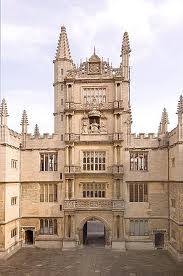
For fun here are a couple of photos of the Bodleian Library (part of the University of Oxford). It is a very old library (founded in the 17th century) and was the centre of my existence for a year (and more) of my life! It's a beautiful set of buildings and rather puts our very practical libraries at Monash to shame!


The gatehouse (porter's lodge)
with reading rooms above
Bodleian Library 

The Radcliffe Camera
Bodleian Library


The interior of the Duke Humphrey Library
Bodleian Library

Friday, 23 March 2012

Abelard and Heloise: Medieval Celebrities Par Excellence

Week 5: New Urban Institutions: The Commune and the Univeristy - Tutorial Discussion Post


Hi everyone!

This week in tutorial we will be concentrating on educational developments during the twelfth century, and in particular the rise of the university and specialized training and education. I am really excited about this week's tutorial as the history of education in the twelfth century is one of the focuses of my own research and it was actually through reading Abelard's Historia Calamitatum and the subsequent letters he exchanged with Heloise that I fell in love with the twelfth century and decided to pursue further study in medieval history.

Peter Abelard, as you may have noticed from his autobiography, the Historia Calamitatum(History of my Calamities), was a very controversial figure in the twelfth century. He continues to be a controversial figure in scholarship today. For some (both in the twelfth century and now) he is a genius - a prince of dialectic (logic) and theology, and a charismatic teacher and mentor. For others he's an arrogant, irritating, over-rated, puffed-up trouble-maker. Whichever way you react to Abelard there is no doubt that he was an impacting and influential personality and both his dramatic personal life, and his talent for intellectual enquiry, have ensured that he continues to intrigue medieval historians to this day. We are fortunate that Professor Constant Mews teaches and works at Monash as he is one of the world-renowned leading experts on the writings of Abelard and Heloise. As famous in the field perhaps as Abelard and Heloise in their day were, but perhaps not so controversial!

For this week I encourage you all to look over the tutorial discussion questions for this week, especially questions one and two, as well as think about the following.....

1) How does Abelard present himself in the Historia Calamitatum? Why does he present himself in such a way?

2) Was he really like the person he presents himself to be in the Historia Calamitatum? Would you like to be his student? His teacher?

3) Why is he so important in the history of education and intellectual thought?

4) What two major sins of his is Abelard keen to highlight in the Historia Calamitatum? How has he been punished for them? Why is he keen to tell us about them?


A depiction of Abelard and Heloise
from a medieval manuscript


A later artistic impression of Abelard
and Heloise

As always please post your comments, reflections, and questions below!

.........

What about Heloise I hear some of you say? It is true that we are only introduced to her briefly in this week's readings. She was a very remarkable woman and a talented intellectual in her own right. Scholars now see her as far more than Abelard's pupil. They are now beginning to realize that she actually was more of his intellectual partner and potentially influenced his own thought and philosophy a great deal. I've attached a link here to the first letter Heloise wrote to Abelard after she read the Historia Calamitatum. It is fascinating to understand her perspective on their lives together. This translation also includes a brief introduction to the scholarly controversy that has raged for decades over whether or not in fact she wrote her letters. Most scholars agree now that she did but there are still a few deniers out there!

What elements of the Historia Calamitatum does she disagree with? Why?


This translation is really old fashioned but it hopefully gives you a taste of Heloise's writing! For anyone interested in reading their entire correspondence I recommend the following translations:

Radice, Betty (trans). The Letters of Abelard and Heloise, Penguin Books: London, 1974.

McLauglin, Mary and Bonnie Wheeler (ed. and trans.). The Letters of Heloise and Abelard: A Translation of their Collected Correspondence and Related Writings, Palgrave Macmillon: New York, 2009.

And for a more controversial take on their correspondence.....

Mews, Constant J. The Lost Love Letters of Heloise and Abelard: Perceptions of Dialogue in Twelfth-Century France, Palgrave: New York, 2001.

Heloise is my personal hero so I do hope some of you are able to glance over her letter for this week!

Another absolutely over the top imagining of
Heloise and Abelard courtesy of the 19th century!


.....

And, as always, just for fun......

For anyone really really interested in understanding more about Heloise, her thought and writing do check this little article out:


It's an absolute shameless little bit of self-promotion as I wrote it for a postgraduate journal when I was a student at Oxford....but despite me being the author I think it still has something interesting to say!

And, finally, Abelard and Heloise are today buried (or thought to be buried) at the Pere Lachaise Cemetery in Paris. Their tomb (created in the 19th century) is absolutely beautiful. If you ever get a chance to go to Paris I highly recommend stopping by! People still leave flowers for them!

Tomb of Abelard and Heloise

Heloise's effigy on her tomb

Abelard's likeness

Thursday, 22 March 2012

*** Important Information for the First Assignment ***

Hi everyone!

So the deadline for our first assignment is coming up pretty soon. Here are some more details regarding this assignment that will help you complete it and submit it on time.

Your assignment is to summarize the argument(s) made by Davis in the chapter from his book,A History of Medieval Europe, that forms our reading assignment for Week Four. Here is what Clare has said about the assignment in our unit reader:

'Students are asked to summarize the argument of the article read in Week 4. The object of this summary will be to encourage students to engage critically with the argument presented by the author. Students ought not to quote the article, but rather attempt to precis key ideas and evidence in their own words. The purpose of the exercise is to train students in reading and note-taking, so they will be able to synthesize various historical sources. There is no need for referencing and footnotes in this exercise.'

In our tutorials from yesterday I tried to encourage each group (some had more time for this exercise than others) to think about how to summarize Davis' argument and especially to think about how the two sections of the article are related to each other. From there I encouraged, and still encourage, everyone to, once they have put Davis' argument into their own words, to think then about the key points Davis uses to support and discuss his argument.

As I say, some groups had more time to work on this aspect than others. For that I do apologize and would like to encourage anyone who is worried or unsure about how to approach summarizing Davis' argument to email me and I will provide all the support I can.

Submission Due Date: Friday, 30 March, 5pm (5th Week)

Submission Process: An online copy must be submitted to Blackboard by 5pm on March 30th. A hard copy must then be given to me in tutorial in Week 6. The online submission is your official submission so please ensure you are familiar with Blackboard before attempting to submit. Instructions on how to submit via Blackboard will be given out at our next tutorial. If you are having trouble submitting via Blackboard send me an email with your assignment before the 5pm deadline.

Word Limit: 800 words

Remember to: double space your assignment, include page numbers and your name (and preferably a title as well), and attach the cover sheet. Remember that footnotes and a bibliography are not required for this assignment.

Any questions: please email me.

If you find that you are struggling a bit with this assignment another good resource to consult is the Language and Learning Centre which has a variety of tools and aids designed to help students with their writing.

http://www.monash.edu.au/lls/llonline/index.xml

Good luck everyone!